
LISTENING THERAPY TO SUPPORT PEDIATRIC OCCUPATIONAL THERAPISTS
LISTENING THERAPY TO SUPPORT PEDIATRIC OCCUPATIONAL THERAPISTS
Help children build the capacity for connection, play and participation in therapy.
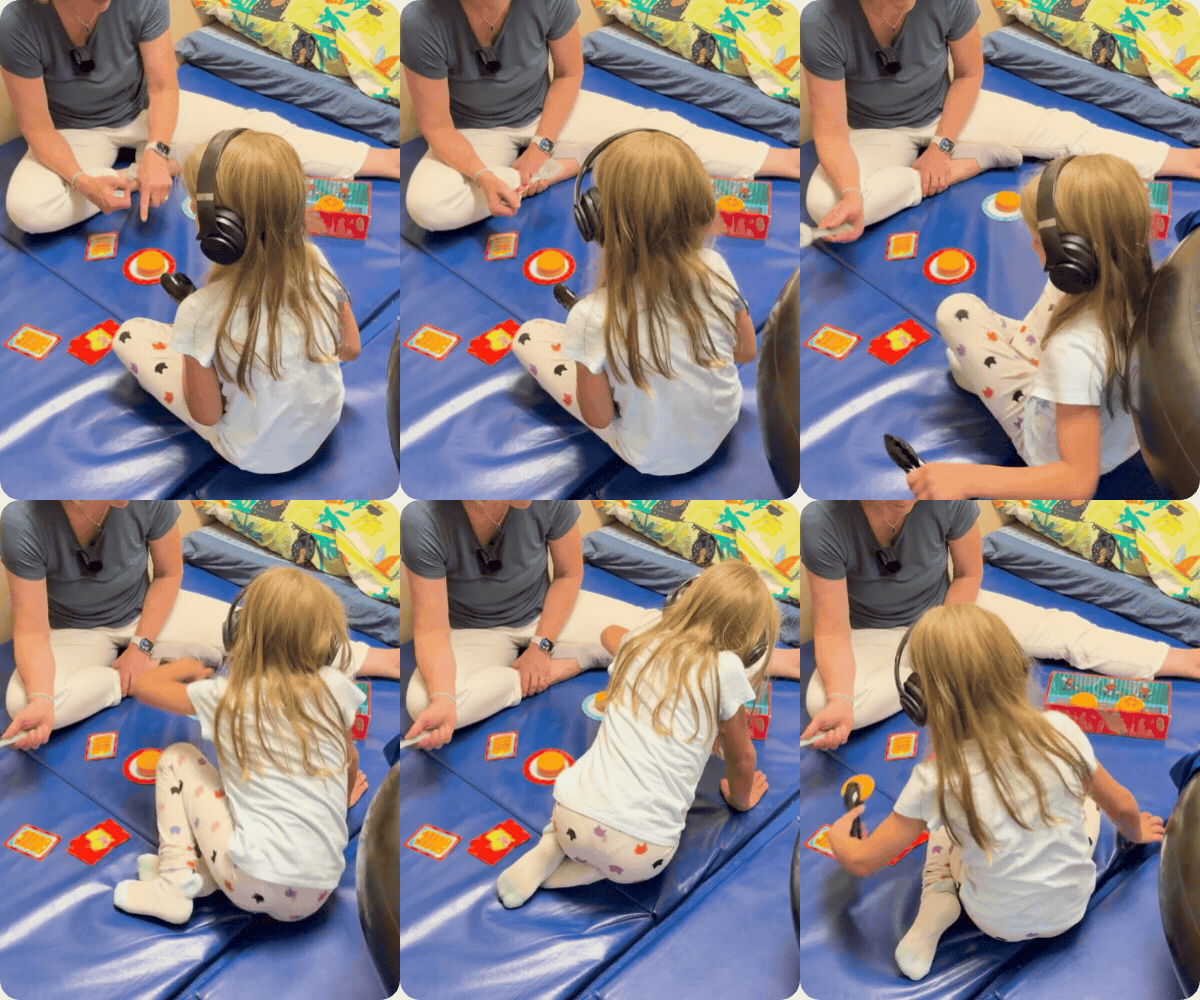
Give your pediatric clients a more regulated starting point with the Safe and Sound Protocol (SSP).
The SSP is a provider-guided listening therapy for children who experience sensory overwhelm, auditory sensitivity, or difficulty connecting. The SSP offers a pathway to more attention, connection, and participation – in therapy and beyond.
A no-pressure conversation about clinical fit, implementation and pricing.

Used by 10,000+ healthcare professionals worldwide.
Pediatric OTs help children build skills that matter in everyday life. The Safe and Sound Protocol (SSP) is an evidence-based listening therapy that offers a pathway to support the regulation that can help children more easily access and strengthen those skills.
84%
of caregivers of children who experienced the SSP reported fewer psychosocial challenges.
81%
of clients who experienced the SSP reported an improvement in symptoms of depression.
85%
of clients who experienced the SSP reported an improvement in symptoms of anxiety.
Real-world evidence collected through Unyte Assessments. These data do not control for other therapies, medications or contextual variables and should not be interpreted as controlled clinical-trial results.
You know the session.
A small frustration becomes a big response. Sensory overload makes participation difficult. Transitions derail a session — or the family’s day.
You’ve adjusted the environment, changed demands, built scaffolding and tried thoughtful sensory strategies. Still, a child may spend so much time working toward a workable state that there’s less room for play, motor goals and skill-building.
The question may not be, “What else should I try?” It may be, “What conditions could help this child access what I’m already offering?”

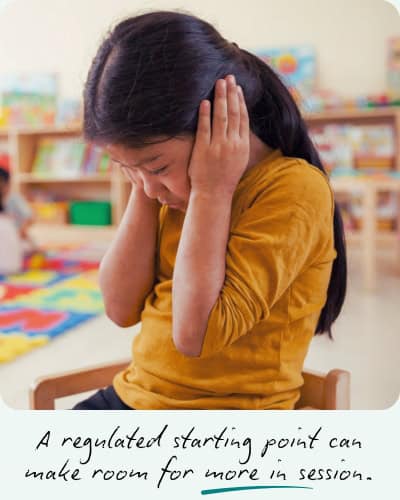
Give therapy a more regulated starting point – and see the work you’re doing become even more impactful.
The Safe and Sound Protocol (SSP) provides a body-first pathway to nervous system regulation through listening.
Developed by Dr. Stephen Porges and rooted in Polyvagal Theory, SSP uses specially filtered music designed to support autonomic regulation and cues of safety.
For pediatric OTs, this means creating more opportunities for children to connect, explore, play and participate in the everyday skills you’re helping them build.
A no-pressure conversation about clinical fit, implementation and pricing.
As regulation increases, clients may have greater capacity to:

Direct attention
Notice and engage with people and activities.
Connect
Build shared attention, attunement and co-regulation.

Explore
Take part in sensory experiences and motor challenges.
Participate
Bring developing skills into play and daily routines.
Therapists like you are seeing results.

“I see trust, I see connection, I see safety being kindled at a level that the therapeutic process can flow without barriers.”
Ana Do Valle, OTR, SEP

“It is only when they are in a ventral vagal or ‘regulated state’ that we can assist our clients in working on other goals. Safety is everything when it comes to trust and participation in the world around us and is critical for our clients’ success.”
Daphne Boucher, Occupational Therapist

“Our client and her family have attempted many different therapeutic interventions over the developmental years and unfortunately were discouraged with the outcomes. The positive results of the SSP have provided this family with encouragement and hope.”
Dalyce Wilson-Podesky and Julie Campbell, Therapists
New to SSP? Start With Our Free Guide for Pediatric OTs
Download Path to Provider: Your Guide to the Safe and Sound Protocol (SSP) to see how SSP is designed to support regulation and participation in pediatric occupational therapy.
Inside, you’ll find the Polyvagal Theory behind SSP, real practitioner case studies, and a clear path to becoming a certified provider — so you can explore whether it’s a fit for your practice at your own pace.
Fill out the form to receive your free guide:
Add nervous-system support to the work you already do.
Get SSP Certified
Complete the 5-hour on-demand provider training featuring Dr. Stephen Porges, Deb Dana and other leading clinicians, plus earn CEs!
↓
Identify Fit
Consider each client’s presentation, history, readiness, and individual needs. Unyte’s live and online support can support you as you’re getting started.
↓
Introduce Listening Therapies
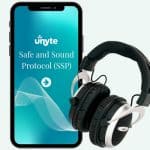
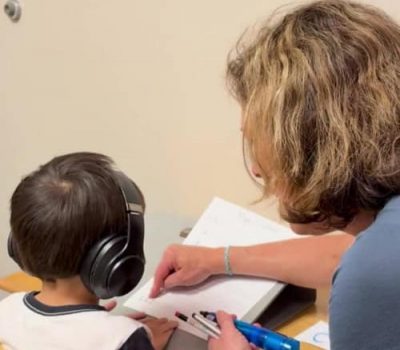
Guide clients through their chosen SSP playlist in person or remotely, through the Unyte app and over-ear headphones. You control pacing and intensity based on client presentation.

You may not need another sensory strategy. You may need another way in.
A no-pressure conversation about clinical fit, implementation and pricing.
Grounded in Polyvagal Theory. Informed by research and clinical use.
In a real-world data sample, caregivers of 219 children reported at least some challenges with psychosocial functioning before starting the SSP Core program. After completing 5 Hours of SSP Core, 84% reported improved symptoms.

Meet Matthew
Matthew’s sensory challenges made everyday routines like bathing and eating stressful, and made social situations like play outings and library storytime difficult.
His therapist introduced the Safe and Sound Protocol (SSP).
After SSP, Matthew’s therapist and mother reported that he was more comfortable sharing space with other children and unfamiliar adults. Matthew also demonstrated improved sleep quality. His therapist observed that he was calmer and more engaged in therapy.

Client Experience
“I am extremely happy with the results and how it is positively affecting his social skills in a variety of different settings.”
— Matthew’s Mother
Designed for how pediatric OT happens in real practices.
SSP may be a fit if you work with children who:
- Experience auditory sensitivity or sensory modulation differences that make everyday environments harder to navigate.
- Become overwhelmed by sensory input or have difficulty recovering when demands change.
- Find co-regulation, shared attention or reciprocal play difficult to access.
- Know regulation strategies but have trouble using them when frustrated or overwhelmed.
- Have difficulty engaging in sensory integration, motor planning or play when they’re not yet ready to participate.
Safe and Sound Protocol is not:
- A replacement for occupational therapy or the therapeutic relationship
- A one-size-fits-all protocol delivered without clinical judgment
- A self-directed consumer program; SSP is guided by a trained provider
A clear path to getting started.
A valid license, certification or professional credential is required to get certified and deliver the SSP.
Step 1: Foundational Training
Complete our online Foundational Training course at your own pace (approx. 5.5 hours).
You’ll gain practical clinical guidelines, safety protocols, and earn approved CE credits across major mental health boards.
Step 2: Integrate SSP & Access Support
Your subscription provides access to all SSP pathways and playlists via the MyUnyte app, digitized clinical assessments, and HIPAA-compliant client management.
It also includes ongoing live Client Success support, Client Connections™, advanced training, CE opportunities, and access to an exclusive provider community.
Annual subscriptions start at
$139/month
+ $299 one-time cost of training
Start with a free practice consultation
Bringing new clinical tools into your practice is a big decision. Speak directly with a member of our team – all practicing or former clinicians who understand the nuances of client care.
In 20 focused minutes, we’ll help you:
Evaluate Caseload Fit:
Discuss your unique client population and confirm if the Safe and Sound Protocol (SSP) is the right listening therapy for your practice.
Get Honest Answers:
Ask detailed clinical, practical, or technical questions clinician-to-clinician.
Map Your Custom Path:
Build a personalized training and subscription roadmap that matches your clinical timeline and budget.
A no-pressure conversation about clinical fit, implementation and pricing.
Ready to go? You can purchase online and get started right away.
FAQ
Questions OTs commonly ask:
Will SSP replace the modalities I already use?
No. SSP is intended to complement the approaches you already use. It may offer another way to support a child’s capacity to access your existing work.
Is SSP evidence-based?
The Safe and Sound Protocol (SSP) is a powerful, evidence-based listening therapy designed to support nervous system regulation and improve emotional and physiological resilience. With real-world evidence from thousands of clinicians and clients worldwide, the SSP has been shown to reduce symptoms of anxiety, depression, trauma and psychosocial challenges by helping individuals achieve a state of safety and calm. This evidence-based approach makes the SSP a trusted tool for nervous system regulation. Explore the research and success stories that validate the power of the SSP to transform lives here.
What does training involve?
Foundational SSP Training is online and on demand. It covers Polyvagal foundations, clinical rationale, delivery, pacing and practical integration. A valid professional license, certification or credential is required to deliver SSP.
Can I use SSP in person and remotely?
Yes. Providers can guide client listening in clinic or remotely through the Unyte Health app while managing delivery and resources through MyUnyte.
How much extra work will implementation create?
The training, platform, implementation resources, clinical tools, assessments and Client Success support are designed to make adoption manageable. Delivery still requires clinical judgment, individualized pacing and monitoring.
Why is there an ongoing subscription?
The subscription provides licensed music, the delivery technology, playlists and program updates, client licenses, implementation resources, education, community and ongoing support. It keeps providers on the current version of the program rather than leaving them with a static one-time purchase.
Is SSP appropriate for every OT client?
No. You may consider SSP for children with sensory modulation challenges, auditory sensitivity or difficulty with regulation, co-regulation and social engagement. Training and clinical judgment help determine whether it may be appropriate for an individual child.
Can SSP fit with Ayres Sensory Integration®, DIRFloortime® or Zones of Regulation?
SSP may be considered alongside those frameworks. It is not a replacement for your approach; it may offer an additional way to support readiness for participation.
What happens on the call?
You can discuss the clients you serve, the modalities you use, what SSP delivery looks like, training and implementation requirements, subscription costs and whether the program is realistically suited to your practice.
Let’s explore whether supporting their nervous system could create another path forward.
A no-pressure conversation about clinical fit, implementation and pricing.
 © 2026 Unyte Health US Inc.