
 |
By Marcella Cox, LMFT, CEDS-C Reviewed by Unyte Editorial Team |
Internal Family Systems (IFS) therapy offers clinicians a robust, compassionate framework for understanding the human mind. For therapists, clinicians and healthcare providers working with trauma recovery or emotional regulation, IFS aligns beautifully with Polyvagal Theory to provide an integrated mind-body approach to healing and transformation.
Understanding the IFS Model: The Self and Parts
Developed by Richard C. Schwartz, Ph.D., IFS is a non-pathologizing, strengths-based model of psychotherapy that understands the mind as naturally multiple. Rather than viewing inner voices or conflicting impulses as problems, IFS recognizes them as “parts” — distinct inner personalities that each carry their own feelings, beliefs and roles. At the center of every system is an innate core Self, a steady presence characterized by qualities such as Calmness, Curiosity, Compassion, Confidence, Creativity, Clarity, Courage and Connectedness.
The aim of IFS is to help clients access and be led by Self so that their protective parts can relax, and burdened parts can be witnessed and healed. In this Self-led state, the internal system naturally reorganizes toward greater harmony and wholeness.
IFS categorizes parts into three main roles based on their function within the system:
- Exiles: These parts hold the pain, shame and fear (such as sensations, emotions and beliefs like “I’m bad”) from earlier traumatic experiences. They are isolated to protect the system from intense distress.
- Managers: These parts run day-to-day life, working proactively to prevent distress from exiles, often through strategies like vigilance, control, perfectionism or people-pleasing.
- Firefighters: These parts react when the pain of exiles is experienced by reactively dousing the distress through behaviors like numbing, dissociation, anger or compulsive behaviors.
According to IFS, all parts are well intentioned, even when their behaviors appear challenging or extreme. The therapeutic goal is not to eliminate parts, but to help them unburden and trust the leadership of the Self.
Integrating IFS with Polyvagal Theory: The Embodied Connection
IFS therapists may find that understanding Polyvagal Theory deepens the ability to support clients’ physiological regulation. Developed by Stephen W. Porges, Ph.D., Polyvagal Theory provides an understanding of how the autonomic nervous system (ANS) organizes itself to respond to cues of safety or threat.
The three primary states of the ANS include:
- Ventral vagal: Social engagement and connection
- Sympathetic: Fight-or-flight activation
- Dorsal vagal: Shutdown or collapse
The connection between IFS and Polyvagal Theory is essential. Access to Self energy in IFS aligns with what Polyvagal Theory describes as the ventral vagal, safe, social engagement state; Self energy is an emergent quality of ventral activation. Conversely, when a client’s body shifts into protective states (sympathetic or dorsal vagal), their capacity for social engagement is restricted, and they lose access to the critical mass of Self energy needed to effectively connect with their parts.
This deep integration is amplified by Somatic Internal Family Systems (SIFS), developed by Susan McConnell, which emphasizes that parts and Self energy are experienced and expressed through the bodymind system. Susan McConnell teaches, “When the Self is embodied, it potentiates every step of the IFS Model and is a source of healing with every clinical issue and with social issues.”
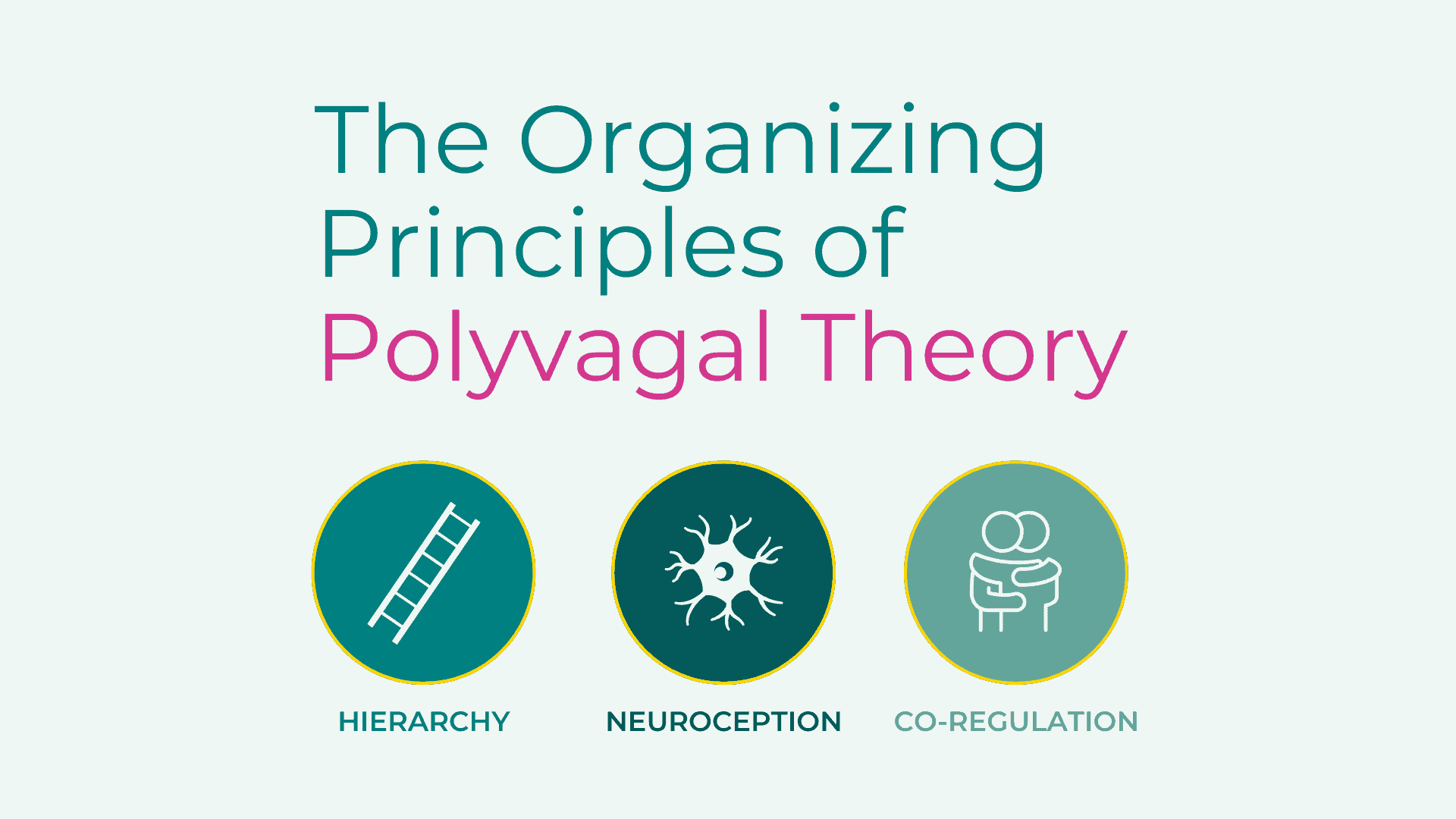
Free download: The Organizing Principles of Polyvagal Theory
Share with your colleagues and clients! The science of safety explained visually in an infographic format.
From “Resistance” to Protection: A Polyvagal Perspective on Safety
A core concept linking IFS and Polyvagal Theory is neuroception, the nervous system’s unconscious detection of safety or danger. For clients with trauma histories, neuroception is often biased toward danger, leading to chronic protective activation, and protective parts often orient themselves around these neuroceptive signals.
From an IFS lens, this understanding reframes challenging clinical moments. What is often called “resistance” in other therapeutic approaches can be better understood as intelligent protection. As their role is to keep the system safe, protectors step forward when they sense danger through neuroception, especially when they are informed by previous traumatic experiences. When providers recognize the wisdom in the part’s response, it creates an opportunity to become curious about what safety and connection may look like for the part and system as a whole in that moment.
“Healing happens at the speed of trust” is an essential concept in IFS — and trust in the therapeutic relationship grows as the nervous system experiences safety and co-regulation.

Supporting Regulation with Bottom-Up Listening Therapies
Listening therapies, such as the Safe and Sound Protocol (SSP) and Rest and Restore Protocol, can provide powerful bottom-up support for IFS practitioners and clients. These clinical-grade, sound-based interventions use music to help shift the nervous system out of states of chronic defense and into regulation, laying the groundwork for deeper therapeutic work.
Real-world evidence shows that these listening therapies are valuable in supporting the body shift toward states that foster safety and increase access to the system’s innate Self energy.
- Safe and Sound Protocol: Developed by Dr. Porges, this listening therapy functions as a non-invasive vagus nerve stimulator that uses carefully filtered music to shift the nervous system out of a chronic state of defense and into a state of social engagement through ventral vagal activation.
- Rest and Restore Protocol: Co-developed by Dr. Porges and audio innovator Anthony Gorry, co-founders of Sonocea®, RRP is designed to promote deep relaxation, balance and recovery through rhythmic entrainment into restorative parasympathetic states.
By helping the body return to states of safety and social engagement, listening therapies make it easier for clients to access Self energy. When the body feels safe, protectors can relax, exiles can be witnessed, and parts work unfolds more naturally.
The Provider’s Role: Embodied Co-Regulation
The success of IFS and listening therapies is largely influenced by the provider’s own embodiment of Self. A therapist’s own regulated state communicates safety through tone of voice, facial expressions and breath, which helps support the client’s nervous system to co-regulate.
As Dr. Schwartz puts it, “I’ve found that the most important variable in how quickly clients can access their Selves is the degree to which I’m Self-led. When I can be deeply present to my clients from the core of my being, … clients respond as if the resonance of my Self were a tuning fork that awakens their own.”
When therapists integrate listening therapies into their IFS practice, they support this co-regulatory process both physiologically and relationally — creating conditions for deeper, safer and more sustainable healing.
The Synergy of IFS, Polyvagal Theory and Listening Therapies
By combining IFS with Polyvagal-informed interventions and sound-based therapies, providers can more effectively help clients:
- Build safety and connection from the bottom up
- Increase access to Self energy
- Support emotional and physiological regulation
- Foster lasting integration and healing
Listening therapies from Unyte Health, such as the Safe and Sound Protocol (SSP) and Rest and Restore Protocol (RRP), offer clinicians practical tools to complement IFS and other trauma-informed approaches. Together, they create a more embodied, regulated and compassionate path to healing.
Free webinar: IFS and Nervous System Regulation: Creating Conditions for Safety, Connection and Transformation
In this session, Dr. Frank Anderson and Marcella Cox guide you through two healing approaches: listening therapies and Internal Family Systems (IFS). Led by two IFS experts, you’ll leave with an understanding of the parallels in theory and practice between IFS and listening therapies, including the impact on Self and parts, both wounded and protective.
Please fill out the form below to access this webinar:
About the Speakers
Frank Anderson, MD, is a world-renowned trauma treatment expert, Harvard-trained psychiatrist, and psychotherapist. He is the acclaimed author of Transcending Trauma, memoir, To Be Loved: A Story of Truth, Trauma, and Transformation, and the coauthor of Internal Family Systems Skills Training Manual. As a global speaker on the treatment of trauma and dissociation, he’s passionate about teaching brain-based psychotherapy and integrating current neuroscience knowledge with Internal Family Systems (IFS).
Dr. Anderson is the co-founder of The Trauma Institute and Trauma Informed Media, organizations that promote trauma awareness, education, integration, and healing. He is a lead trainer at the IFS Institute under Richard Schwartz and has a long affiliation with Bessel van der Kolk and the Trauma Research Foundation. Dr. Anderson maintains a private practice in Harvard, MA, where he lives with his husband and two sons. Follow him at FrankAndersonMD.com and on Instagram at @frank_andersonmd.
Marcella Cox, LMFT, CEDS-C, is a therapist, author and presenter who has devoted her career to exploring the intersection of embodiment, trauma healing and eating disorder recovery. She’s a Level 3 Certified IFS Therapist, an Approved IFS Clinical Consultant, and is a Somatic IFS Assistant Trainer for Susan McConnell, developer of Somatic IFS. She leads Somatic IFS and IFS for disordered eating workshops, trainings, retreats, and consultation groups. She is committed to creating an inclusive, and empowering learning environment where participants can explore the transformative potential of IFS and Somatic IFS.
Marcella is also founder of Kindful Body, providing online therapy and nutrition counseling for eating and body issues in California, as well as co-founder of the IFS Consultation Collective providing weekly consultation with IFS lead trainers. www.ifs-consultation.com


 © 2026 Unyte Health US Inc.